For a complete first setup below US$300, start by comparing the Creality Ender-3 V3 SE and ELEGOO Neptune 4 Pro Type-C. Their observed printer prices leave room for a spool and modest supplies. A printer listed at $279 or $299 can exceed a $300 total once tax and filament are included.
This is a researched buying guide based on manufacturer documentation, not a hands-on test or measured ranking. Recommendations below are our interpretation of the documented features and the stated use case.
Price check: October 9, 2026 (UTC). Listed US-dollar prices are observations from manufacturer product pages, before tax and any shipping or import charges. They are not checkout quotes or a guarantee of stock. Select the exact variant and delivery address before comparing totals.
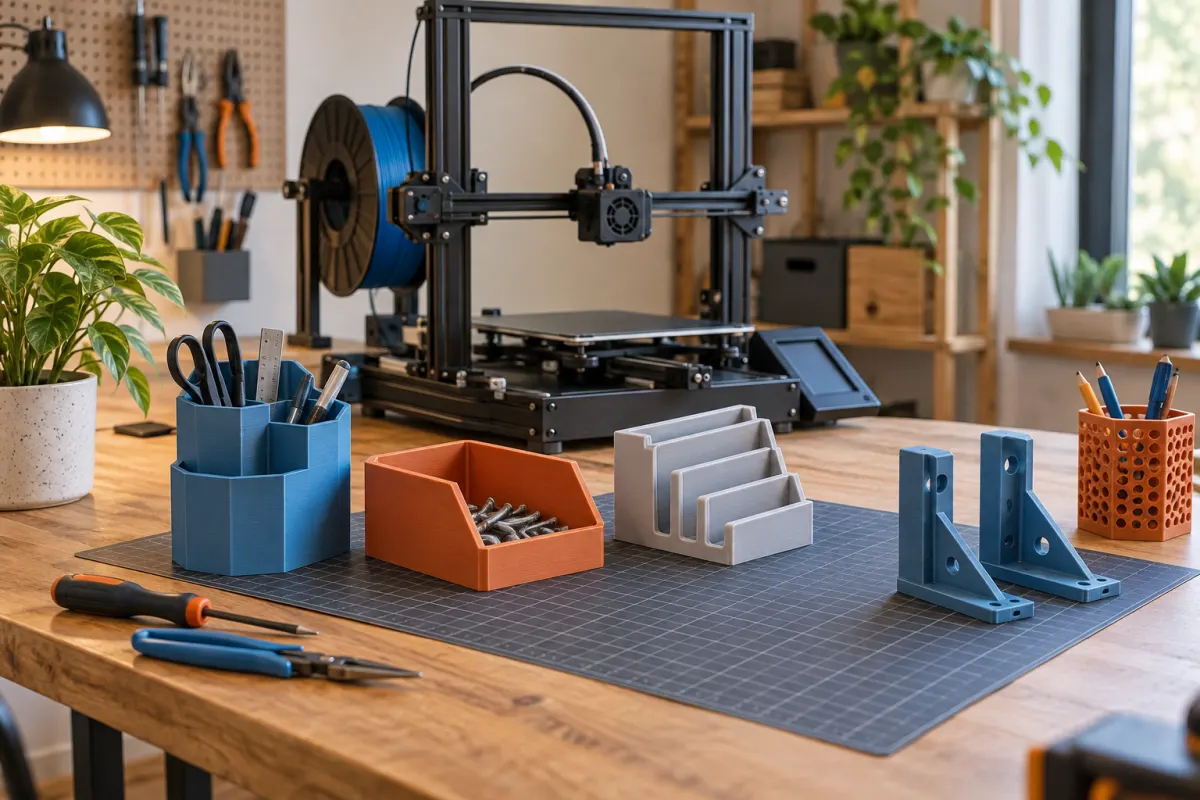
A shortlist with room left in the budget
| Printer | Observed printer price | Nominal build volume | Budget implication |
|---|---|---|---|
| Creality Ender-3 V3 SE | $199 | 220 × 220 × 250 mm | Leaves $101 before supplies, tax, and shipping |
| ELEGOO Neptune 4 Pro, Type-C | $229 | 225 × 225 × 265 mm | Leaves $71 before supplies, tax, and shipping |
| ELEGOO Centauri 2, printer-only option | $279 | 256 × 256 × 256 mm | Comparison alternative; little room for a complete $300 setup |
Prices come from Creality’s product listing, ELEGOO’s Neptune 4 Pro listing, and the Centauri 2 selector. The last is the $279 printer-only option, not the $329 Combo. The Ender specification page supplies its build dimensions.
This is a focused shortlist, not a claim to have checked every printer on sale. We have not verified a current US price for the Bambu A1 mini, so we do not count it as an eligible under-$300 setup.
Put the whole first purchase into one calculation
Use this formula: printer + filament + missing essentials + shipping + applicable taxes = initial total. Subtract that from $300 before considering optional upgrades. If shipping is calculated only after entering an address, the budget is provisional until that step.
For an illustrative Ender setup, use the observed $199 printer price, a $20 spool allowance, and a $15 allowance for supplies missing from your kit. Assuming an illustrative 8% tax on all three and no shipping charge, $234 × 1.08 = $252.72. That leaves $47.28 for unexpected costs.
With the same assumptions, the Neptune setup is ($229 + $20 + $15) × 1.08 = $285.12, leaving $14.88. Those supply prices and tax assumptions are planning inputs, not verified retail offers. Your address and shopping choices determine the real result.
Choose by workflow after both pass the price test
The Ender is the candidate to investigate when preserving budget is the first priority and its model size is sufficient. Read the setup instructions before ordering; a low price is less useful if the assembly and adjustment process is something you do not want to do.
The Neptune 4 Pro adds a little nominal space in each axis. Its current US page explicitly identifies the Type-C version and cautions about matching replacement parts. Record that version in your purchase notes instead of ordering accessories for any listing called “Neptune 4.” The plain Neptune 4 listing showed sold out during our check; the Pro is the distinct model compared here.
Do not select solely from the advertised maximum speed. A successful print uses many different motions and speeds, and we have no comparable timed test between these machines. Load the same example project into supported slicer profiles to investigate estimated time, material, and whether the model fits.
Buy the supplies your first projects actually need
Read the box contents before buying a toolkit. Assembly tools and a small material sample may already be included; a sample is not a substitute for budgeting the filament needed for your planned projects. Check the selected variant rather than an old unboxing video.
Begin with one suitable ordinary PLA color and the plate preparation specified by the maker. Include a way to store unused filament and a clear, stable work surface. If you already own suitable basic tools, redirect the saved allowance toward printing material or keep it unspent.
A dryer, extra nozzle collection, spare build plates, multicolor feeder, and lighting kit should each solve a named problem before joining the initial basket. Our starter tools guide helps separate immediate needs from later purchases. Adding every discounted accessory defeats the purpose of this budget.
Recognize when a bargain no longer fits
The $279 Centauri 2 example shows why the headline threshold matters. Add a hypothetical $20 spool and $15 supplies, and the subtotal is already $314 before tax or delivery. It may deserve comparison under a larger budget, but it is not an honest recommendation for this particular complete-$300 basket.
If a sale ends, recalculate rather than chasing the same model at any price. For an alternative printer, require the same checks: correct regional voltage and plug, supported materials, useful documentation, a seller with a clear return process, and available model-specific consumables.
Used equipment is a separate decision. A missing plate, worn hotend, or absent cable can erase the apparent saving. This guide compares new manufacturer listings; it does not establish the condition or value of an individual secondhand machine.
Reserve money for learning and ownership
Suppose your first planned objects use 600 g and you allocate another 200 g for setup, tests, and unsuccessful attempts. At an illustrative $20 per kg, the total material allowance is $16. A one-kilogram purchase covers that example, but it does not make the remainder free: record what each project consumes.
Use the cost calculator with your actual filament price and electricity inputs. Electricity, replacement consumables, and your time are ongoing costs beyond the starting basket. Rated printer wattage is not a measured average electricity draw.
Choose the Ender or Neptune only after the actual checkout total and workspace both fit. If neither leaves a usable reserve, saving a little longer can be more practical than buying a stripped setup that cannot complete your first project.
Sources & further reading
- Creality US: Ender-3 V3 SE product listing
- Creality: Ender-3 V3 SE specifications
- ELEGOO US: Neptune 4 Pro, Type-C version
- ELEGOO US: Centauri 2 and Centauri 2 Combo
Manufacturer guidance can change. Check the instructions for your exact printer, build surface, and filament.